.png)
Object Record
Images
Additional Images [6]
Metadata
Object name |
Footwarmer |
Date |
late 18th century |
Place of origin |
United States |
Materials and techniques |
metal and wood |
Physical description |
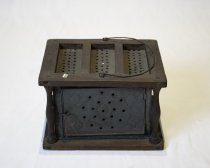
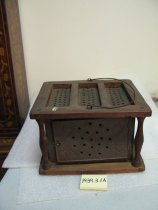
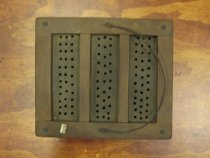
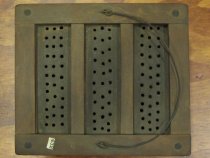
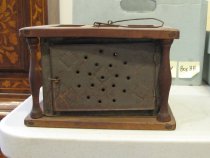
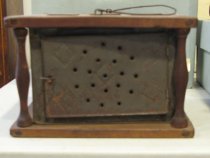
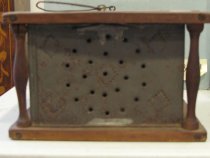
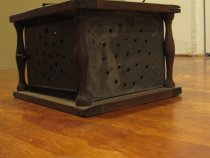
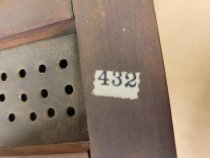
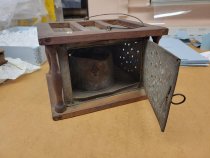
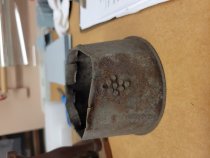
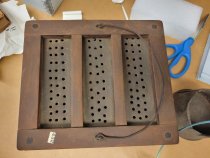
Footwarmer which belonged to John Comey (1753- 1830) Corporal, Massachusetts Militia. Roundtip pan inside; simple circular design from holes in tin. Presented by his great grandson, John W. Comey |
Historical context |
"Before the mid-1800s, American homes and public spaces were often poorly heated. One device that helped early Americans keep warm was the foot warmer - a box with holes poked in the sides and a tray inside for hot coals. A metal handle or rope allowed the user to transport the warmer easily. In the 17th, 18th, and early 19th centuries, women and children carried foot warmers to meetings or to church.Women's long skirts would hang over the foot warmer, holding in the precious heat - an excellent use for these seemingly impractical garments. Although improvements in heating occurred in the 1820s, foot warmers continued to be used in sleighs and carriages. In the late 1800s and early 1900s, heated concrete blocks were used as foot warmers in automobiles. Foot warmers were made of wood, tin, brass, or a combination of these materials. The holes punched into wood and tin foot warmers often formed a pattern or design. Ventilating holes in the sides form decorative patterns, three of which depict a bird with a heart carved in its center. Popular in early America as wedding gifts, foot warmers were commonly decorated with hearts. Hearts also appear in combination with the Federal eagle in early US folk art." From: http://www.metc.org/artifacts.htm Source: Mr. John W. Comey |
Current exhibit |
Governing the Nation from Fraunces Tavern |
Catalogue number |
1939.03.001a |
Collection name |
Furniture and Decorative Arts |
Credit line |
Gift of John W. Comey |
People |
John Comey |
Subjects and places |
Massachusetts United States |