.png)
Object Record
Images
Metadata
Object name |
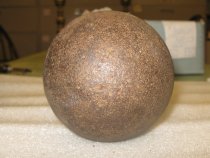
Cannonball |
Date |
late 18th century |
Place of origin |
United States |
Materials and techniques |
cast iron |
Physical description |
Twelve pound, solid shot cannonball. One of six cannon balls taken from the battlefield of Monmouth. |
Current exhibit |
Path to Liberty: The Emergence of a Nation |
Gallery label |
Path to Liberty (2025): Cannons were among the most powerful weapons of the 18th century. During the Revolutionary War, they played a key role in the Patriots’ defense against the British. Fought on June 28, 1778 in New Jersey, the Battle of Monmouth was one of the largest land engagements of the Revolutionary War. Though it ended without a clear victory, the battle helped restore faith in Washington’s leadership, proved the value of Von Steuben’s drills, and boosted Patriot morale. Over 3,000 cannonballs were fired at Monmouth, including some on display here. This case shows three types, each with a different purpose. Solid or hollow shot ranged from about 3 to 36 pounds and were used to break walls and enemy lines. Grapeshot, made of small iron balls packed in a cloth bag, spread out like a shotgun blast to hit enemy soldiers at close range. The bar shot here is made of two half shots connected by an expanding bar and was mainly used to damage sails and rigging. Operating a cannon took teamwork. Volunteers hauled the guns into place, while trained artillerymen loaded and fired at the enemy’s troops, horses, and defensive structures. Depending on the cannon’s size, it took six to twelve soldiers to operate each gun. |
Catalogue number |
1926.02.002 |
Collection name |
Tools and Equipment |
Credit line |
Mr. Charles L. Bernheimer |
Subjects and places |
Monmouth New Jersey United States |